24/7 Emergency Smoke Damage Restoration in Talent
24/7 emergency smoke damage restoration in Talent, OR. IICRC-certified, insurance billing accepted. Call (541) 821-3664.
Our IICRC-certified technicians are dispatched from our Ashland, OR headquarters and are typically on-site in Talent within 60 minutes of your call.
Smoke damage emergency in Talent? We answer 24/7, and the sooner a crew gets into the structure, the better the odds of saving framing, insulation, and belongings before smoke residue bonds permanently to surfaces. Talent sits low in the Rogue Valley, where temperature inversions can trap wildfire and structure-fire smoke against the valley floor for days, pushing soot and odor deep into homes long after the flames are out.
Why Talent Properties See Smoke Damage Issues
Talent’s position in the Rogue Valley, hemmed in by the Siskiyou foothills and the Bear Creek corridor, means smoke doesn’t clear the way it might on more open, windswept ground. During regional wildfire season, valley inversions hold smoke close to the surface overnight and into the morning, and that smoke finds its way through attic vents, window gaps, and HVAC returns even in homes nowhere near the fire line. Add an interior structure fire, grease fire, or electrical fire into that mix and you get the same problem compounded: porous materials like drywall, insulation, and fabric hold onto smoke odor and acidic soot residue far longer than homeowners expect. Older homes in the area, many built before modern HVAC sealing standards, tend to pull smoke deeper into wall cavities and ductwork than newer construction, which changes how we approach cleaning versus replacement.
Our Smoke Damage Restoration Process in Talent
Every job starts with an assessment of what kind of smoke residue we’re dealing with, because protein residue from a kitchen fire behaves differently than dry wildfire ash or the thick, oily soot from a synthetic-material fire. We test surfaces before we touch them, since the wrong cleaning agent on the wrong residue type can set a stain or smear odor deeper into porous material. From there, crews work room by room: containing unaffected areas first, then running HEPA air scrubbers to pull suspended soot particles out of the air before they resettle on surfaces we’ve already cleaned. Hard surfaces get wiped and treated with residue-specific cleaners; soft goods, upholstery, and textiles either get cleaned on-site or bagged for off-site treatment depending on how deep the smoke has penetrated. Odor is handled last, using thermal fogging or hydroxyl treatment rather than masking agents, because covering the smell doesn’t remove the particles still embedded in the materials.
Reaching Talent from Ashland
Our crews are based a short drive north on OR-99, the route that threads through Ashland, Talent, and Phoenix along the valley floor, so staging and getting a truck on-site doesn’t involve crossing the I-5 corridor at a bottleneck. That proximity matters more for smoke jobs than people realize: soot residue sets harder the longer it sits, and a same-day start on extraction and air scrubbing makes a real difference in whether a ceiling or a set of cabinets gets cleaned versus replaced.
Equipment & Methods We Use for Smoke Damage
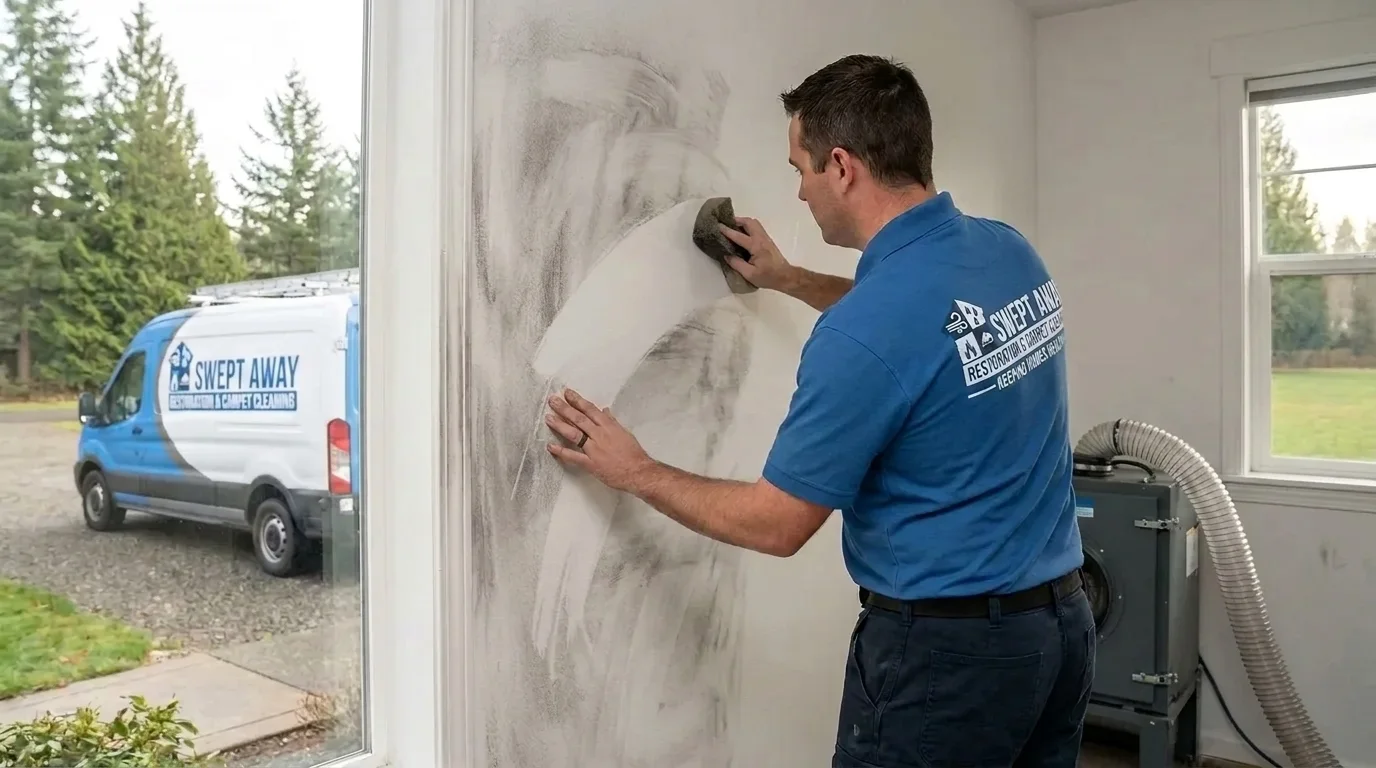
We run commercial-grade HEPA air scrubbers, thermal foggers, and ozone or hydroxyl generators depending on the odor profile and whether the home is occupied during treatment (ozone requires the space to be vacant; hydroxyl does not). For structural surfaces, we use dry chemical sponges on porous material before introducing any liquid cleaner, since wiping dry soot with a wet rag just smears it into the surface. Ductwork gets inspected and cleaned separately when smoke has traveled through the HVAC system, which is common in homes where the furnace or AC was running during the fire or during a heavy wildfire smoke event.
Local note
One thing we watch for specifically in this part of the valley: homes with older evaporative coolers or window units instead of central air tend to have more direct exterior-to-interior air paths, which means wildfire smoke infiltration can be worse here than in a comparably aged home with a sealed central HVAC system. We check those units and the surrounding wall penetrations early in the assessment, because that’s often where lingering odor keeps coming back from even after the visible soot is gone.
If smoke from a fire, wildfire event, or nearby incident has settled into your Talent home or business, don’t wait for the smell to fade on its own, because odor that lingers past a few days usually means residue is still embedded in porous materials. Call Swept Away Restoration and we’ll get a crew assessing the damage and started on cleanup before soot has a chance to etch itself permanently into your walls, cabinetry, or belongings.
Serving Talent from our Ashland headquarters — ★ 5.0 · 46 Google reviews
“Joanna and her team are the absolute best! They came in immediately and started a tear out and drying process. They stayed in contact through that process. We are waiting on our insurance, who are not helpful, to start our rebuild. Joanna has been with me every step of the way. She has guided me in…” — Jean, January 2026
Smoke Damage Restoration in Talent: Service Coverage
Frequently Asked Questions
How fast can you arrive for smoke damage restoration in Talent?
How does the Rogue Valley's wildfire smoke pattern affect homes in Talent specifically?
Do older Talent homes with evaporative coolers need different smoke damage treatment?
How fast can your crew reach a smoke damage call in Talent from your Ashland base?
What's the difference between cleaning wildfire smoke residue and structure-fire soot?
Will my homeowner's insurance cover smoke damage restoration for a Talent property?
Smoke Damage Restoration response in Talent
Most Talent calls see a technician on-site within 60 minutes from our Ashland headquarters.